
Eases the burn
Less acid means less heartburn, sour burps and that bitter taste at the back of the throat.
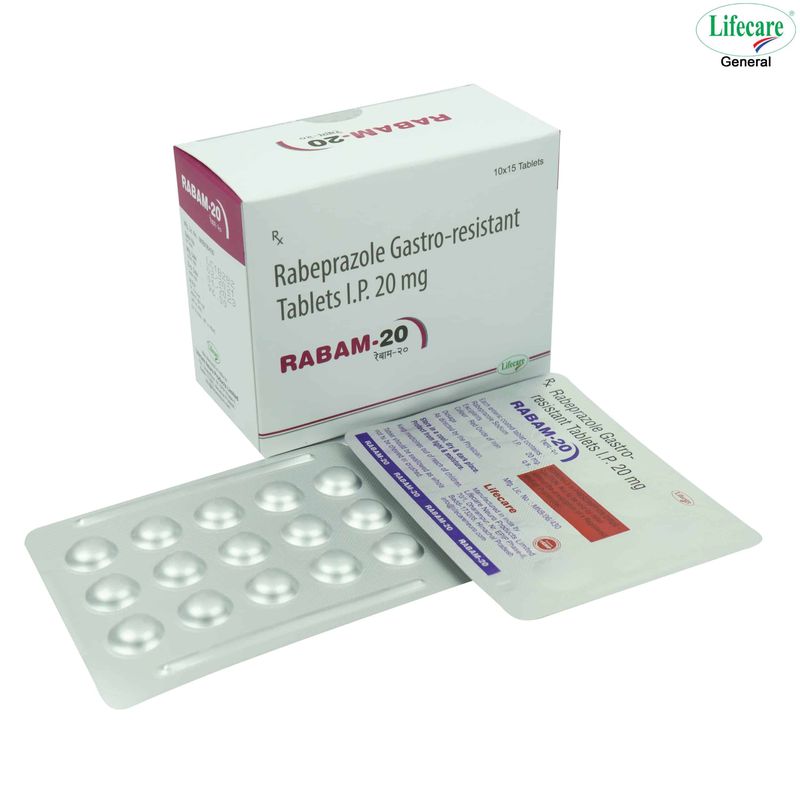
Rabam 20 contains rabeprazole, a medicine that lowers the amount of acid your stomach makes. Doctors prescribe it for acidity, heartburn and ulcers, and to help an irritated food pipe or stomach lining heal. The tablet has a special coating (EC) that protects the medicine from stomach acid, so it is released further down in the gut where it is absorbed.
Rabam 20 is commonly used for:
Less acid means less heartburn, sour burps and that bitter taste at the back of the throat.
With the acid turned down, sores in the stomach or gut can heal and are less likely to return.
Less acid washes back up, which gives the lining of the food pipe time to recover.
Not everyone gets side effects. Most are mild and settle as your body gets used to the medicine.
Talk to your doctor if any of these bother you or don't go away.
The lining of your stomach has tiny "acid pumps" that release acid to digest food. Rabeprazole switches off many of these pumps, so your stomach makes much less acid. With less acid around, the burning eases and sore areas in the stomach and food pipe get a chance to heal.
A quick guide to common situations. Your doctor knows your health best, so always follow their advice.
Alcohol can bring on acidity and irritate the stomach, which works against this medicine. It is best to avoid alcohol or keep it to a minimum while you are taking it.
There is not enough information to say it is safe in pregnancy. It is used only if your doctor feels the benefit clearly outweighs any risk. Tell your doctor if you are pregnant or planning a baby.
It is not known how much passes into breast milk, so it is usually not recommended while breastfeeding. Talk to your doctor before using it.
Most people can drive as normal. If it makes you feel dizzy or sleepy, do not drive or use machines until you feel fine again.
People with kidney problems usually do not need a different dose. Still, let your doctor know about any kidney condition you have.
Use with care if you have a liver problem, especially a serious one. Your doctor may want to keep a closer eye on you.
This page explains the medicine in simple words for general awareness. It does not replace advice from your doctor or pharmacist. Always follow your prescription and the leaflet inside the pack. Prescription (Rx) medicines are supplied and dispensed only against a valid prescription from a registered medical practitioner.